Building Sustainability in Urban Futures
Master of Business Administration
Overview
- Credits90 ECTS
- LanguageEnglish
- Program startsOct 2026
- Tuition fees€19,800
MBA Program
Building Sustainability in Urban Futures (MBA) at Technische Universität Berlin is an interdisciplinary master’s program that prepares professionals to lead the transformation toward climate-neutral and socially responsible buildings, cities, and infrastructures. It is designed for professionals in real estate, project planning, and management who aim to integrate sustainability and address the challenges of diverse urban contexts.
At its core, the program explores how sustainability can be implemented across the built environment by balancing technological, economic, environmental, and social dimensions in planning and management. Students develop a comprehensive understanding of how buildings and urban systems contribute to global sustainability goals and how these can be achieved through innovation, governance, and responsible leadership.
The curriculum combines engineering and building science fundamentals with business management, law, and policy, offering the tools needed to plan, evaluate, and manage complex projects across the entire building life cycle. Topics such as digitalization, renewable integration, energy efficiency, circular economy, and urban resilience are integrated throughout the program.
Teaching takes place entirely in English on TU Berlin’s EUREF Campus, a living laboratory for the German Energiewende and a hub for energy and mobility innovation. Small, international cohorts create an intensive learning environment that combines academic depth with practical application through case studies, group work, and collaboration with industry experts.
The program comprises 90 ECTS credits over three semesters and concludes with a Master’s Thesis that connects academic research with professional practice.
Key Facts about the Building Sustainability MBA
- Degree Master of Business Administration
- ECTS credits 90 points
- Language English
- Program starts Oct 2026
- Application deadline 31. March 2026
- Tuition fees €19,800
- Duration 3 semesters
The MBA in Building Sustainability in Urban Futures prepares professionals to lead the transformation of buildings, cities, and infrastructure toward climate neutrality and social responsibility. The program develops the interdisciplinary knowledge, analytical ability, and leadership skills required to plan, manage, and implement sustainable projects in complex urban environments.
Understand and shape sustainable urban systems
Gain a comprehensive understanding of buildings and urban systems as integrated parts of sustainable development. Students learn to connect technology, economics, management, and policy to evaluate and design effective solutions across the full life cycle of the built environment.
Lead transformation processes
Strengthen the ability to guide change within organizations and projects by applying management, financial, and legal tools. The program fosters strategic and systems thinking, innovation, and responsible leadership in the context of global sustainability transitions.
Build professional and interdisciplinary competencies
Develop strong communication, teamwork, and project-management skills in international and cross-sectoral settings. Students learn to collaborate effectively across disciplines and to integrate ethical, cultural, and social perspectives into their professional practice.
The Building Sustainability in Urban Futures (MBA) develops professionals who can integrate technical, economic, and managerial perspectives to advance the sustainable transformation of buildings and cities. Graduates are equipped with the interdisciplinary skills needed to design and implement responsible solutions in international contexts.
Technical and Analytical Competence
- Evaluate the environmental, economic, and social performance of buildings and urban systems
- Apply tools from energy analysis, life-cycle assessment, and digitalization to optimize projects across the building life cycle
- Integrate renewable energy technologies and circular economy approaches into planning and operations
Leadership and Management Skills
- Plan, finance, and manage sustainability-oriented projects using business, legal, and policy frameworks
- Lead interdisciplinary teams and navigate complex stakeholder environments
- Develop strategies and business models that promote climate neutrality and long-term value creation
Ethics, Communication, and Research
- Communicate effectively across disciplines and cultures in professional and policy settings
- Apply ethical reasoning and social responsibility in decision-making
- Conduct independent research and develop evidence-based recommendations through applied projects and the Master’s thesis
Part of sustainability is quality management. Quality should not be left to chance, but should be the result of a continuous improvement process. TU Berlin has moved its focus from the accreditation of individual study programmes to the evaluation of the university as a system. The university’s quality assurance procedures are designed so that all stakeholders may develop responsibly and in dialogue with one another. System accreditation therefore leads to the accreditation of all study programmes offered by the university.
The subject of system accreditation is the internal quality assurance system of a university in the domain of teaching and learning. The structures and processes relevant for teaching and studies are examined to ensure that they achieve the qualification objectives and the required academic quality. The framework follows the requirements of the Kultusministerkonferenz (KMK), the European Standards and Guidelines for Quality Assurance in Higher Education (ESG), and the criteria of the Akkreditierungsrat (German Accreditation Council).
A positive system accreditation certifies that the university’s quality assurance system in teaching and learning is suitable for ensuring the achievement of qualification objectives and the quality standards of degree programmes. Degree programmes that are designed and managed under the specifications of the accredited system are thus accredited. (Own translation after Akkreditierungsrat, 20 February 2013.)
TU Berlin’s system accreditation by the Zentrale Evaluations‐ und Akkreditierungsagentur (ZEvA) was confirmedfor a period of six years following a positive review in July 2021 by the Central Evaluation and Accreditation Agency (ZEvA).
Building Sustainability in Urban Futures (MBA) is included within this accreditation framework and is currently in its final phase of certification.
Further information: Systemakkreditierung TU Berlin
Sustainability and Built Environment Expertise
The program equips students with a deep understanding of how buildings and cities can contribute to sustainable development. It combines knowledge of building physics, energy systems, and life-cycle assessment with insights into urban resilience, climate adaptation, and the role of digitalization in the building sector, including an introduction to Building Information Modeling (BIM) and related data concepts.
Innovation and Management Skills
Students learn to lead projects and organizations through the transition toward climate-neutral and resource-efficient practices. The program strengthens strategic and financial decision-making, project and portfolio management, and the ability to design innovative, circular business models in the built environment.
Communication and Collaborative Skills
Successful sustainability management relies on clear communication and cooperation across disciplines. The MBA develops leadership, negotiation, and intercultural skills that enable graduates to work effectively in international, interdisciplinary teams and to engage stakeholders with confidence and empathy.
Research and Analytical Skills
The program fosters analytical thinking and evidence-based problem-solving. Students gain the ability to conduct applied research, evaluate complex data, and present findings clearly in professional and academic contexts, supporting innovation and policy development in the built environment.
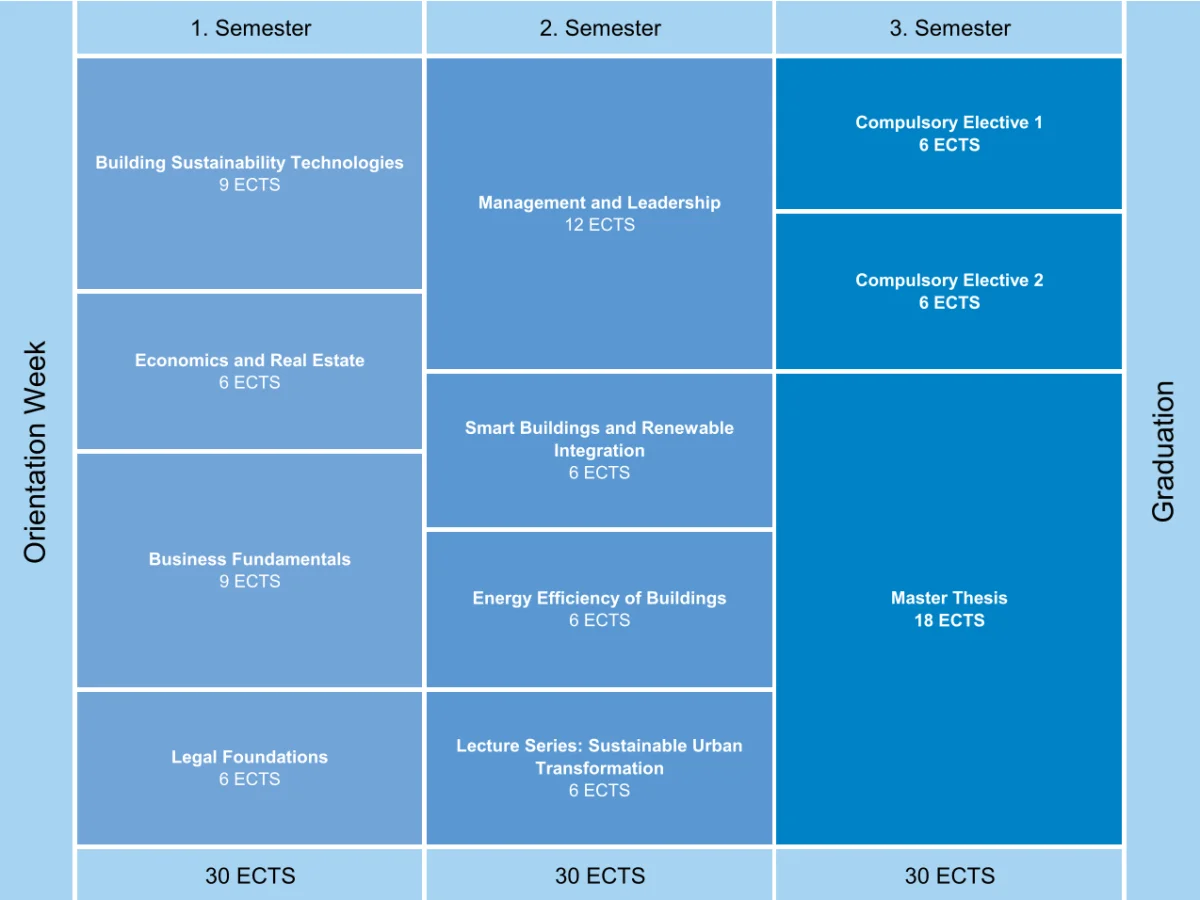
The Building Sustainability in Urban Futures (MBA) is a full-time program comprising 90 ECTS credits completed over three semesters. It combines core modules, electives, and an independent master’s thesis that integrates academic research with practical application.
During the first two semesters, students complete the mandatory core modules in technology, economics, business, law, and management. These modules provide the interdisciplinary foundation necessary to understand and shape the sustainable transformation of buildings, cities, and energy systems.
In the third semester, students choose two electives to deepen their expertise in selected areas such as circular business models, sustainable construction, project management, or international energy systems. The program concludes with the Master’s Thesis, an 18-ECTS research project that allows students to apply their knowledge to a topic of professional or academic relevance.
Learning takes place in small, international cohorts through lectures, seminars, group projects, and applied case studies. The program emphasizes real-world contexts, teamwork, and interaction with academic experts and industry practitioners on TU Berlin’s EUREF Campus.
Program structure

Each module in the Building Sustainability in Urban Futures (MBA) is assessed individually through a combination of written exams, portfolio work, group projects, and presentations. This approach allows students to demonstrate their analytical, managerial, and communication skills across different contexts. The final component of the program is the Master’s Thesis, which is evaluated based on academic quality, methodological rigor, and practical relevance.
All study and examination procedures of the Building Sustainability in Urban Futures (MBA) are governed by the General Study and Examination Regulations (Allgemeine Studien- und Prüfungsordnung – AllgStuPO) of Technische Universität Berlin, available here:
General Study and Examination Regulations (AllgStuPO) – TU Berlin
The General Study and Examination Regulations contain the overarching rules and procedures that apply to all degree programs at TU Berlin. These cover topics such as enrollment, re-registration, part-time studies, leave of absence, termination of studies, and examination procedures.
In addition, each program is governed by its own study and examination regulations (Studien- und Prüfungsordnung – StuPO), which define the specific structure, curriculum, assessment methods, and requirements for the master’s thesis.
Link to BuSu-specific Study and Examination Regulations (StuPO) – [placeholder]
There are also supplementary application and admission regulations (Zulassungs- und Zugangsordnung – ZZO) for master’s programs, which describe the requirements and procedures for admission to each program.
Link to BuSu-specific Application and Admission Regulations (ZZO) – [placeholder]
The legal foundation for these regulations is provided by the Berlin Higher Education Act (Berliner Hochschulgesetz – BerlHG), which establishes the framework for all universities in Berlin. The BerlHG ensures the quality and comparability of study programs, guarantees academic freedom, and regulates key aspects such as admission, examinations, student rights, and degree recognition.
Together, these frameworks ensure that the Building Sustainability in Urban Futures MBA meets the high academic standards of TU Berlin and the requirements of the State of Berlin, providing transparency, fairness, and quality in all aspects of study and examination.
Please note that the German versions of all official regulations are legally binding. English translations are provided for informational purposes only.

Technische Universität Berlin


Buildings for Sustainability

TU Berlin


Berlin University of Applied Sciences


Panteion University of Social and Political Sciences in Athens


Bremen University of Applied Sciences

TU Berlin / Georgia Insitute of Technology

Technische Universität Berlin & DTU Copenhagen


Potsdam Transfer

German Energy Agency (dena)

CBRE
Practical, Applied Learning
The Building Sustainability in Urban Futures (MBA) combines academic rigor with practical application. Students engage with real-world case studies, interdisciplinary group projects, and interactive seminars that connect theory with current challenges in sustainable building, real estate, and urban development. The program’s applied orientation enables participants to translate analytical and technical knowledge into actionable solutions for climate-neutral cities and buildings.

International and Interdisciplinary Learning Environment
Study alongside professionals from diverse backgrounds in engineering, architecture, economics, and policy. The interdisciplinary approach fosters the ability to integrate multiple perspectives when addressing sustainability challenges. Courses are taught entirely in English and take place in small groups of up to 30 students, ensuring close interaction with lecturers and peers. The program is based on TU Berlin’s EUREF Campus, a leading hub for energy, mobility, and urban innovation, where research, teaching, and industry meet.

Networking and Career Development
Students benefit from direct exposure to companies, research institutions, and organizations located on the EUREF Campus and across Berlin’s sustainability ecosystem. Guest lectures, workshops, and project collaborations create strong connections with industry and policy professionals. Graduates of the Building Sustainability in Urban Futures (MBA) are well-prepared for leadership and advisory roles in real estate and construction firms, energy and environmental consultancies, international organizations, and public institutions.
There is a growing demand in Germany and Europe for professionals who can combine technical expertise with strategic, managerial, and intercultural skills. The Building Sustainability in Urban Futures (MBA) opens pathways to careers focused on the sustainable transformation of buildings, cities, and infrastructure worldwide.


Testimonial
This video is hosted on an external platform. By clicking "Load Video", you agree to load content from this third-party service, which may set cookies and track your viewing behavior.
At the Advanced Masters Programs, we celebrate diversity as a source of strength, innovation, and collaboration. Our Charter of Intercultural Understanding affirms our shared commitment to respect, empathy, and open dialogue across cultures. It guides how we learn, teach, and work together in an international academic community, fostering mutual understanding and preparing future leaders for a globally connected world.
Modules
M01 Building Sustainability Technologies
This module introduces the technical foundations that underpin sustainable building performance. Students learn how energy systems, thermal behavior, renewable integration, and material choices influence the environmental footprint of buildings and districts. Through analytical exercises and applied examples, they explore methods for assessing energy flows, system efficiency, and comfort conditions, gaining a solid understanding of how technological decisions shape sustainability outcomes.
M02 Economics and Real Estate
Students are introduced to the fundamentals of micro- and macroeconomics as they relate to the construction and energy sectors. The module covers markets, regulation, investment appraisal, and life-cycle costing, enabling participants to evaluate projects and policy options from both an economic and sustainability perspective.
M03 Business Fundamentals
This module provides a comprehensive introduction to business administration, covering accounting, corporate finance, marketing, organizational behavior, and business ethics. Students gain practical insights into financial decision-making, corporate strategy, and sustainable value creation within the built-environment context.
M04 Legal Foundations
Students learn the key elements of civil, commercial, planning, and construction law. The course introduces European and international legal frameworks and develops the ability to analyze and apply legal principles to real-estate and infrastructure projects.
M05 Management and Leadership
This module combines strategic management, innovation, and communication. Students learn to lead interdisciplinary teams, manage change and risk, and apply tools such as design thinking and stakeholder analysis. Emphasis is placed on leadership, negotiation, and environmental communication in sustainability-driven organizations.
M06 Lecture Series: Sustainable Urban Transformation
This interdisciplinary lecture series brings together academics and practitioners from architecture, engineering, economics, and policy. It provides current perspectives on the sustainable transformation of the built environment and highlights methodological approaches for analyzing complex urban systems.
M07 Smart Buildings and Renewable Integration
Focusing on the technological interface between buildings and energy systems, this module explores building automation, energy management, and renewable integration. Students assess how smart-building concepts contribute to decarbonization and user comfort while addressing data, control, and regulatory challenges.
M08 Energy Efficiency of Buildings
Students acquire the theoretical and practical foundations of energy efficiency in buildings. The module covers energy balance methods, building-physics analysis, and performance evaluation. Case studies demonstrate how efficiency measures can reduce emissions and improve economic viability.
M09 A & B Compulsory Elective Modules
Students select two compulsory elective modules (6 ECTS each) to deepen or broaden their expertise. Options include Circular Business Models in Buildings, Sustainable Building and Life Cycle Assessment, Energy in Emerging Economies, Modern Project Management, Entrepreneurship in Sustainable Mobility, and others offered across the TU Berlin MBA programs. Electives allow students to specialize according to their professional interests and career goals.
M10 Master’s Thesis
The program concludes with an independent research project supervised by TU Berlin faculty. The thesis demonstrates the student’s ability to address a complex problem in sustainable building or urban management through sound methodology, critical analysis, and practical relevance.
University Life
Life in Berlin
Berlin, the capital of Germany, is an international hub offering rich cultural, social, and professional opportunities. Students can access English- and German-speaking part-time jobs, internships, and volunteering or civil engagement opportunities while exploring the city’s dynamic start-up and innovation scene. Regular meet-ups with networks such as Young Mobility Network and Women in Mobility provide opportunities to connect with professionals and peers, fostering both career growth and community engagement. Beyond academics, students can enjoy Berlin’s vibrant cultural life, cafés, museums, music, and parks, making it an exciting place to live and study. Affordable transport is included with the Deutschlandticket, making it easy to navigate the city.
Campus and Facilities
EUREF Campus Berlin
Most classes take place on the EUREF Campus in Berlin-Schöneberg, an internationally recognized site for innovation in energy, mobility, and sustainability. The 5.5-hectare campus brings together more than 150 companies, start-ups, and research institutions that focus on the energy transition and the digital transformation of cities. Around 7,000 people work and study on the campus, creating a vibrant environment where academia, business, and policy meet.
The EUREF Campus has operated with a climate-neutral energy supply since 2014, reaching Germany’s CO₂ reduction targets decades ahead of schedule. Its smart-grid systems, renewable integration, and sustainable buildings demonstrate how a climate-neutral urban district can already function successfully. This environment allows students of the Building Sustainability MBA to study within a living laboratory for the future of cities, where classroom learning is directly connected to real-world practice.
Students also benefit from a welcoming atmosphere. Free coffee and tea, communal spaces, and recreational facilities such as a beach volleyball court provide opportunities to connect and relax between classes. The campus is easily accessible by public transport, and the surrounding Schöneberg district offers cafés, restaurants, and cultural venues that make studying at EUREF both inspiring and convenient.
Technische Universität Berlin
As part of Technische Universität Berlin, students join one of Germany’s leading universities for science, technology, and innovation. TU Berlin combines academic excellence with a strong sense of social responsibility, reflected in its motto: “We’ve got the brains for the future—for the benefit of society.”
With more than 34,000 students from around the world, TU Berlin is known for fostering creativity, entrepreneurship, and interdisciplinary collaboration. Students have access to modern libraries, study areas, and Mensa cafeterias offering affordable meals. The university also provides an extensive range of sports and fitness programs, language courses, and career development services that support both academic success and personal growth.
Extracurricular Activities
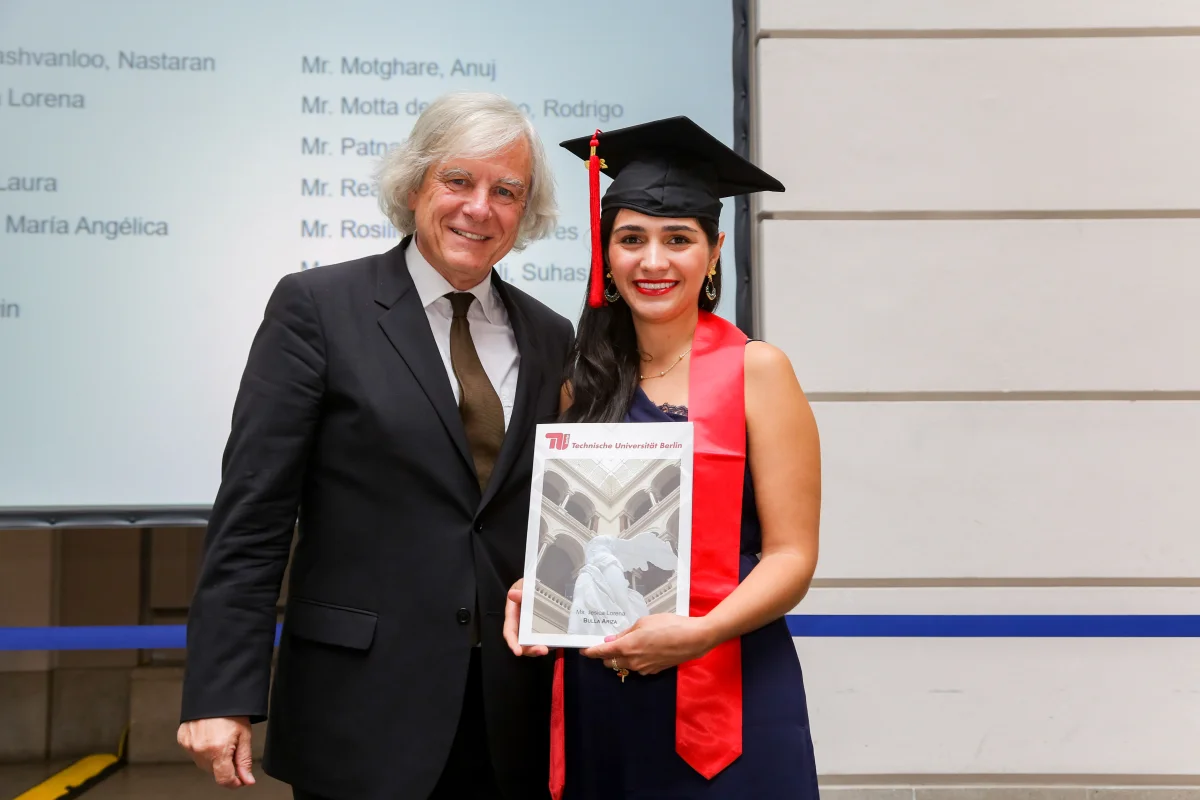
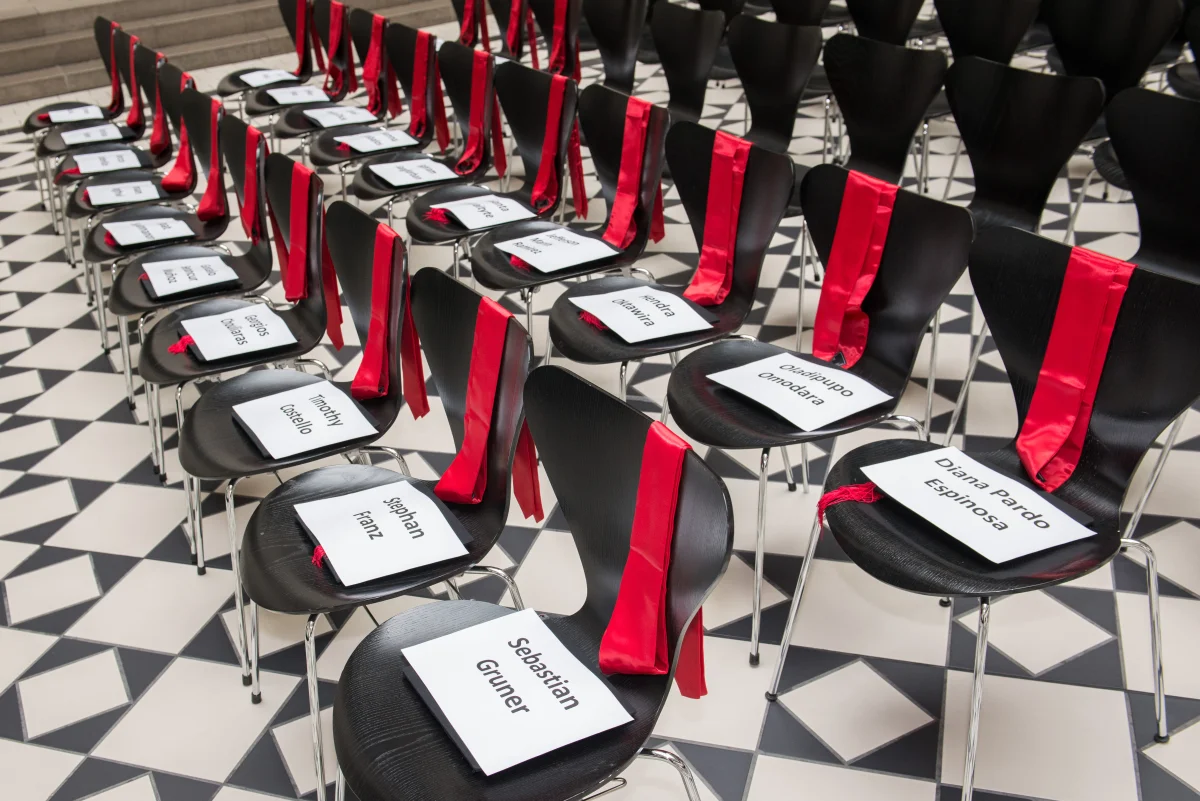
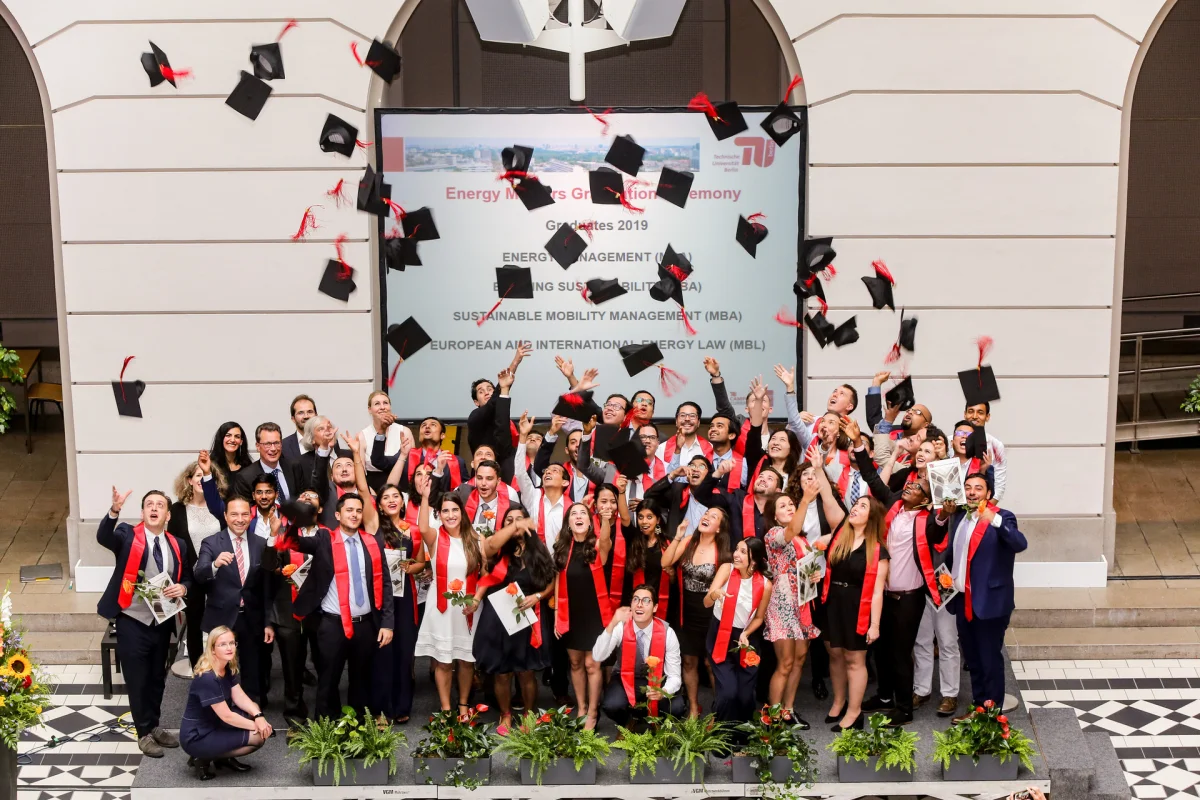
Students are encouraged to take part in a variety of cultural and social events organized by the program, such as Orientation Week, potlucks, sports activities, and the annual Christmas party, which foster networking and community building. The program concludes with a Graduation Ceremony celebrating students’ achievements and providing a final opportunity to connect with peers, faculty, and alumni. In addition, students can participate in extracurricular challenges and competitions, gaining hands-on experience and connecting with peers across disciplines.
Networking Opportunities and Excursions
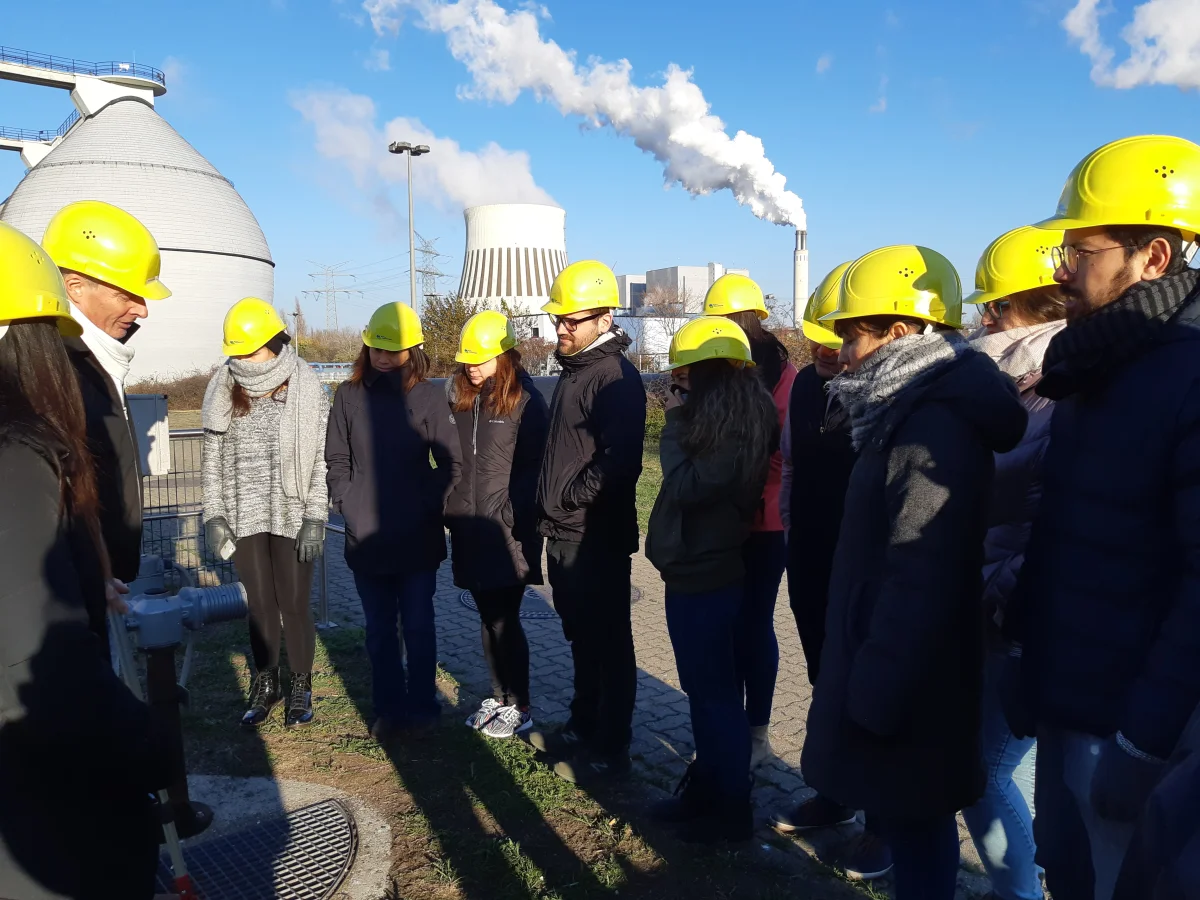
The MBA program offers a variety of opportunities to connect with professionals, peers, and alumni. Students can participate in conferences, alumni meetings, networking events with companies on the EUREF Campus, and excursions to leading organizations. Lecturers from both academia and industry provide insights and connections, while collaboration with students from other MBA programs broadens perspectives and expands professional networks, helping students build valuable connections in the sustainability sector.
International and Interdisciplinary Community
The MBA brings together students from diverse academic, professional, and cultural backgrounds, creating a truly international learning environment. Small, interactive class groups and group projects encourage collaboration and the exchange of ideas across disciplines, fostering interdisciplinary thinking and preparing students to tackle complex challenges in sustainable urban development.
This spirit of community continues beyond graduation through an active alumni network, which connects graduates across the world and supports ongoing professional exchange, mentorship, and career development.
Application
Application Period
The regular application period will start from October until March 31st of each year for a start in October of the same year. 📩 Missed the regular application deadline? If you do not require a visa and are still interested in joining the program, please contact us at contact@master-in-energy.com. We are happy to review individual cases.
The number of students is limited to 30 per year. An admission committee will decide about selection based on results of former studies, the study profile, and further relevant qualifications that were attained outside the university.
For more information, please check The Application and Admission Regulations. (English translation, German version binding)
Required Application Documents
- copy of your first university degree (original and translation into English)
- transcript of records (translation into English)
- proof of work experience (at least one year after your first university degree!)
- letter of motivation
- CV
- proof of English-language skills (see below for more information and exemptions, we recommend B2-C1 minimum)
- GMAT/GRE, if available
Finance
Tuition Fees
Tuition fees for MBA excluding semester fees (enrollment/administrative fees) (currently 360,49 € per semester, includes public transport ticket “Germany Ticket”). Tuition fees and the in/exclusion of the semester public transportation ticket are subject to change. Please check the regular administration fees for the latest information.
Fees can be paid by Flywire.

Scholarships
Search Engines
The following search engines can help you to find a suitable scholarship:
German Foundations
- Hanns Seidel Foundation
- Heinrich Böll Foundation
- Heinrich J. Klein Foundation
- Friedrich Naumann Foundation
- Konrad Adenauer Foundation
- Rosa-Luxemburg Foundation
- Evangelischer Entwicklungsdienst (EED)
- Katholischer Akademischer Austauschdienst (KAAD)
- Peter Fuld Stiftung
- Stiftung Industrieforschung
- Studienstiftung des Abgeordnetenhauses von Berlin
Other National Scholarship Programs
Ameica
Colombia
Egypt
Germany
Indonesia
Mexico
Russia
Team

Technische Universität Berlin


Events & News
Student Voices


Contact Us
Still looking to apply for
the current 2026 intake?
Contact us for more information!